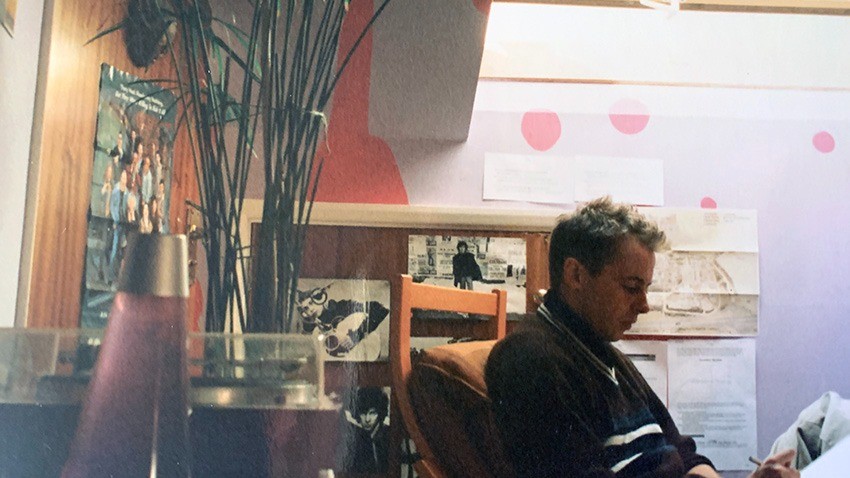
As a 23-year-old I faced a few challenges. Thanks to a natural ability to write and a good work ethic, I graduated with a top class degree in English. The problem was I had no idea what I wanted to do with it, and some bad habits. I felt lost after six months at Barclays Bank on their Business Leadership Program. I had applied for it on the strength of a summer internship but a career in banking depressed me. I was struggling to get out of bed in the morning and put on a suit. I wasn’t suited to it. I worried about that a lot. I didn’t see a lot of options for alternative paths forward. I was starting to panic. I didn’t want to give up on some of the idealism and creativity I’d held onto through my life so far at some cost. But I didn’t know what to do next.
Many of my friends at university had parents who worked in the media. My dad was an engineer and my mum was a teacher. These are gradations on the scale of what it means to be middle class in England but I needed an uncle in publishing. I didn’t have one. My parents didn’t know anybody who could help. I had a few friends at university who had landed nice internships from such links. They could see a path forward where I couldn’t. It would have been too much for me to ask for their help. I needed to earn money and felt at a loss to find a path into a career I found interesting.
At the time I saw my lack of connections as a weakness but in fact it was a strength. It meant that I was hungry for any opportunity I could find, no matter how it came along. With hindsight I would tell myself to have more confidence in my abilities. Compare yourself less to other people, I would say. That’s a route to madness.
At my dad’s work there was a photographer who came in every year to take pictures for their annual report. My dad asked him one day if he’d be open to having somebody shadow him. I realize this was nepotism. The photographer needed to keep my dad happy to ensure his future contract, so it was a big ask for my dad to make. It made him vulnerable and exposed him to some risk if I messed things up. I was cognizant of this and wanted to make sure I didn’t let my dad down. Things like that mattered a lot in my family.
My dad had bought me a few career books and was showing signs of concern, but he didn’t know what else he could do. The photographer said he’d talk to me. I called him up and we set a week, a month later, for me to follow him around. The biggest thing about being a photographer, he said, was that you need to be able to fill in a tax return. It’s not as glamorous a profession as it sounds, he said. It’s difficult and you need to be able to grind. Truth.
I showed up on time. He noticed. I was very keen indeed to be helpful. He had a flat in Southeast London, and every morning I would ride my bike over there from my parents’ place. It was a five mile schlep through the worst of West Croydon. I’d ride past the shopping center. I’d ride past the run-down hospital where I was born. I would think “this better work out, because I don’t have any other ideas.” Later there would be riots in those streets and other young lost men would burn down buildings. I was different from them, but not so different. What made the difference?
The photographer was kind to me. He had me round for dinner after a few days and cooked a nice meal. We ate off wooden Japanese plates sitting on his floor. His fridge was half-full of film. It struck me as the most exciting meal anyone was eating in Streatham that night. He said he needed an assistant for £150 a week, which was about a third of what I was earning at the bank. I resigned the next day and started working for him two weeks later. The photographer came along to my leaving drinks. People at the bank thought I was mad but they took me out for a nice lunch to say goodbye. I enjoyed the lunch a lot. I was grateful for the understanding they showed me. Some of them even confessed to being a bit envious of my courage because it’s not a common trait in banking.
I’ve already run out of room to talk about why this matters so much to me. But the short version is: I was not in a good place. I did not know how to get out of there. The photographer could have been less kind to me, and I would have floundered. There weren’t a lot of other paths. My dad helped. The photographer helped. At a time when everyone is asking how we can “win over young men,” it’s very important for me as a man to reflect on kindness. It shaped my success where its absence could have shaped something different. Women have been kind to me too but at that point in my life it was kind men like my father and the photographer who helped the most.
Who have you been kind to, lately? I’m thinking about Blanche DuBois in “A Streetcar Named Desire.“ Her last line in the play is that “I have always relied on the kindness of strangers.” Although she’s talking to a man in a white coat at the time, of course.
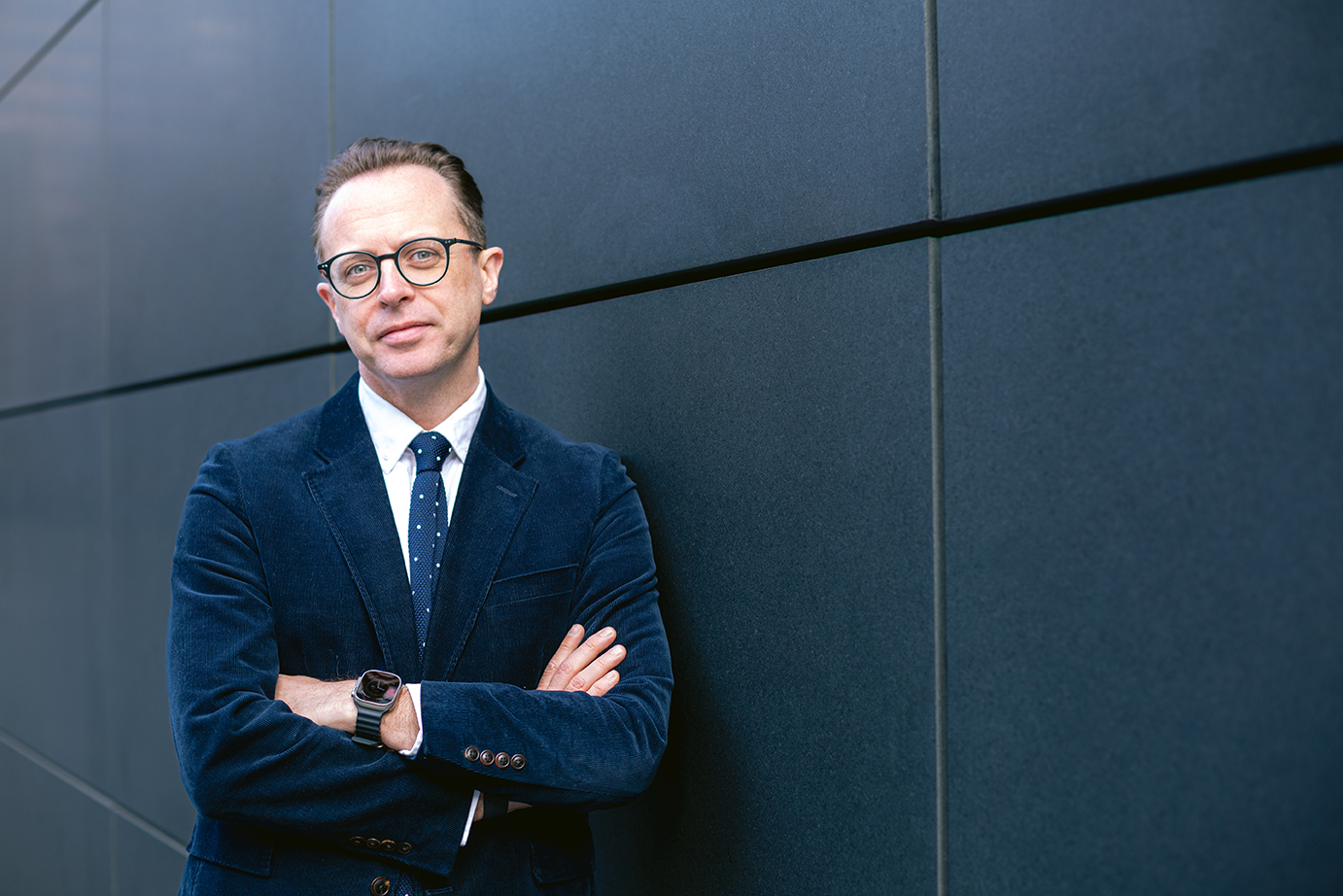
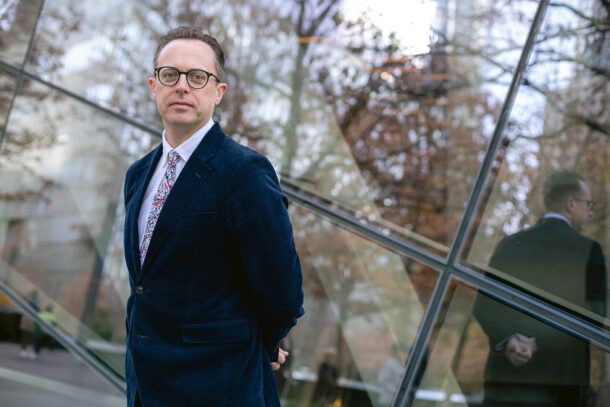
Matt Davis is a strategic communications consultant in Manhattan.