Growing up in Southeast London, I learned about the unwritten rules of the street long before I understood the nuances of a corporate balance sheet. I’ll never forget a local “hard man” from my neighborhood, someone who commanded a room without ever needing to raise his voice, telling me, “You don’t get respect unless you give respect.”
It was a simple philosophy that carried immense weight in our corner of London during “the Troubles.” As an English boy, I was technically on the “colonial” side of the Irish conflict, but that reality only heightened my awareness. When the IRA was blowing up shopping centers throughout my childhood, the tension was a constant hum. When history is heavy and grievances are deep, respecting the “other side” isn’t just a courtesy.
Years later in New York City, I saw how that historical weight follows you. I’ve stood in a neighborhood bodega during recent Middle Eastern conflicts with the guys behind the counter yelling “1947!” at me, the year the British Mandate helped create the modern state of Israel. Conversely, a close friend who spoke Hebrew at home and traveled to Israel twice a year taught me the vital importance of delicacy and subtlety in navigating that side of the issue. We’re all stepping through a minefield on a daily basis, basically.
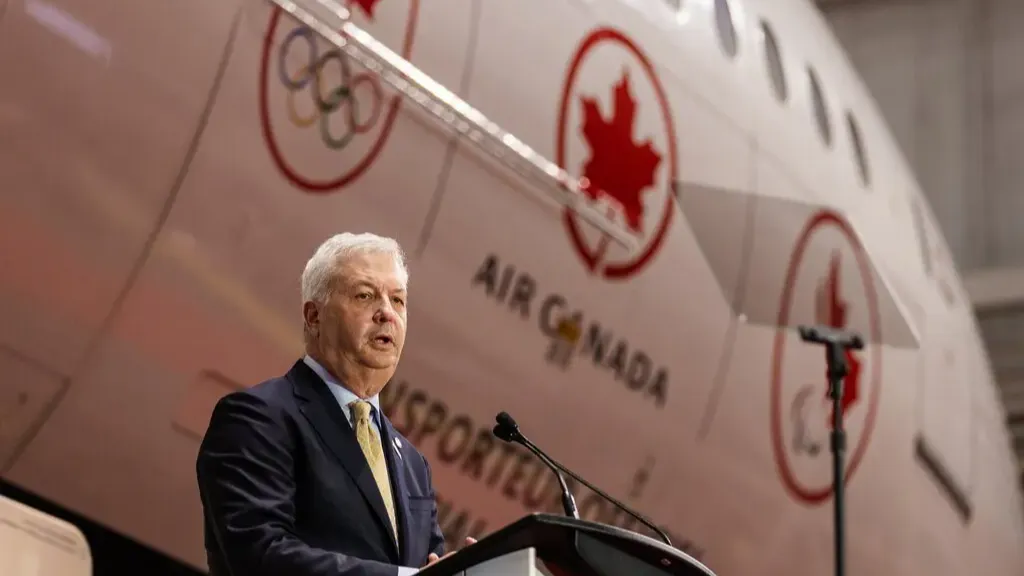
I thought about all of this as I read about the resignation of Air Canada CEO Michael Rousseau this morning. His departure was about a bankruptcy of respect. The breaking point came following the tragic crash of Flight 8646, which claimed the life of Captain Antoine Forest, a French-speaking Quebecer. Rousseau’s subsequent video message was almost entirely in English, save for a “Bonjour” and “Merci.”
I marvel that somebody close to him wasn’t able to step in and intervene, and it shows he didn’t value communications enough to listen to an expert who would have told him at the very least to read the message from a teleprompter.
In a moment of grief, he failed the most basic test of leadership: Meeting people where they are. As Industry Minister Mélanie Joly noted talking to the New York Times, “It is a question of moral leadership. If he still doesn’t speak French today, it’s disrespectful to his employees and to his francophone customers.”
To understand the outrage, you must understand the context of the Quebec sovereignty movement and the long shadow of colonialism. For Francophones, the English-only corporate suite is a symbol of historical dismissal. When a leader ignores that history, they are being provocative.
Prime Minister Mark Carney captured this, saying the English-only message showed a “lack of judgment and a lack of compassion.” Crisis management expert Louis Aucoin was even more direct, telling the Times: “Rousseau’s lack of respect outweighs his lack of French. If you’re real about compassion, you’ve got to talk to the people that you want to receive this message.”
Now that I’ve moved to Norfolk, Virginia, I’m navigating a whole new set of cultural currencies. I’m an outsider in the American South. My next-door neighbor has a Confederate battle flag on the back of his Ford truck; we have very different worldviews, but we need to get along. It’s not always easy but it matters.
To most ears here, I’m “English” first, which often grants me a baseline of perceived “sophistication”, even if back in England, my Southeast London accent marks me as something else entirely. I’ve realized that if I want to be part of this community, I must show respect for its customs. I’ve got a Costco membership. I grill every weekend. I just edged my lawn. You show respect by doing the work to fit into the fabric of the neighborhood.
This work, though, goes deeper than lawn maintenance. At my church, Christ & St. Luke’s, we recently started a Lenten book study with Second Calvary Baptist, a Black church across town. It’s only three miles away as the crow flies, but in a city where racial segregation is both recent and ongoing, that distance can feel like an ocean.
As we read a book about oppression together and navigate these complexities, I’ve learned that as a white guy in the South, the most important thing I can do is be myself while staying acutely aware of the historical dividing walls around me. You cannot bridge a gap you refuse to acknowledge, and you can’t win everybody over, but likewise, if you show up with a sense of respect, you’re at least setting the right tone.
What can leaders learn from all this? Leadership is the act of honoring people’s experience and identity. People will forgive a mistake, but they will struggle to forgive a lack of effort to bridge a gulf. The more powerful you are, the more it matters, and the more your responsibility counts. Rousseau forgot that respect is the only currency that never devalues. Nevertheless, I do wish him a pleasant retirement. It’s possible that he took the fall on this issue when others who defunded air traffic control and were more directly responsible for the tragedy will escape accountability. At least for the time being.
Matt Davis is a strategic communications consultant.